
Off-grid Solar System Buying Guide
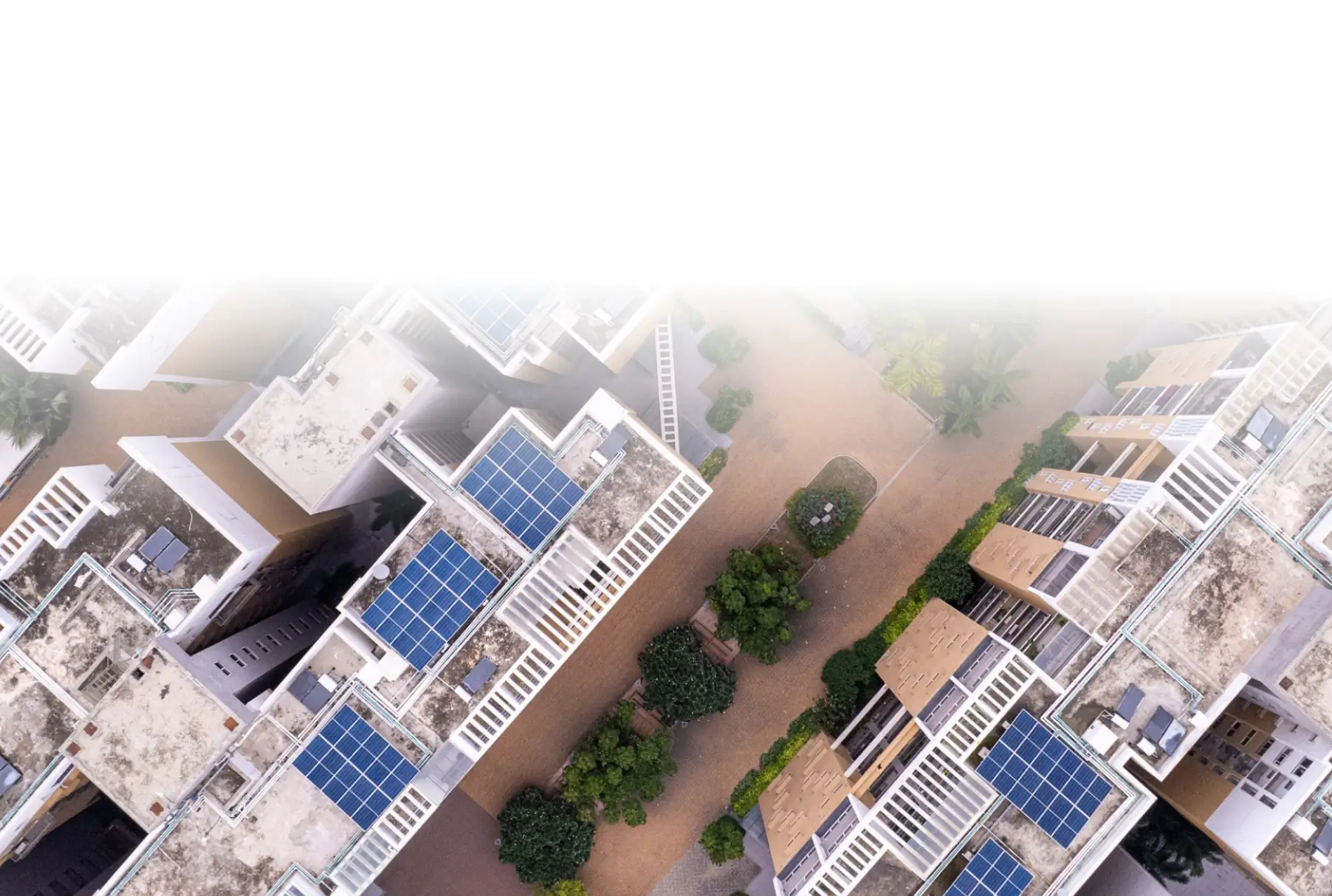
An off-grid solar system, also known as a standalone solar system, works on the same principle as an on-grid solar system: the PV cells capture the sunlight and convert it to electricity. However, the major difference is that there’s no grid connection in the case of an off-grid solar power system. Instead, it uses batteries to store the electricity generated by the panels during sunshine hours.
The off-grid solar system price in India is higher than that of an on-grid solar system price. Besides, maintaining off-grid solar systems takes more effort (and money) because batteries are involved and they have to be replaced periodically to keep the system functioning properly.
To give you an idea of the cost, here are some demonstrative rates:
- 3 kW off-grid solar system price in India: *Rs. 2,40,000 onwards
- 5 kW off-grid solar system price in India: *Rs. 4,50,000 onwards
*Please Note: SolarSquare does not install off-grid solar systems. The off-grid solar panel prices listed above are standard market estimates.
Ready to explore the workings of an off-grid solar system, all the price details, and whether you need to invest in off-grid solar as an Indian homeowner, especially because the Indian government offers a subsidy for the installation of an on-grid rooftop solar system? Dive in for all the details!
What is an Off-Grid Solar System?
An off-grid solar system is a standalone set-up that produces and stores electricity without any connection to the public utility grid. How? It stores the power it generates in batteries.
It’s a careful set-up of the following components that work in tandem to produce electricity from sunlight:
- Solar panels (modules)
- Mounting structures
- Batteries
- Solar charge controller
- Solar inverter
- Solar accessories
When to Use an Off-Grid Solar Panel System?
Most Indian homes do not require off-grid solar systems, as their power consumption needs are met by on-grid rooftop solar systems, which are much cheaper and easier to maintain.
However, you will need an off-grid solar system in the following situations:
- You live in a remote area with no utility grid
- Your area faces extreme power cuts, and the grid is unreliable
However, if you live in an area with a reliable grid connection, the benefits of an on-grid solar system are unbeatable!
What Are the Components of an Off-Grid Solar System?
Now, let’s break down the entire off-grid solar system component by component so you can understand the role of each individual component in electricity generation.
1. Solar Panels
Solar panels are made up of solar cells.
- When they’re made of one single silicon crystal, the resulting panel is monocrystalline.
- When they’re made of multiple silicon crystals, the resulting panel is polycrystalline (multicrystalline).
- When they have solar panels on the front as well as the rear, the resulting panel is bifacial.
Off-grid solar panels trap sunlight and convert it into DC electricity. The one thing that should be taken care of at the time of installation is that shadows should not cloud the panels.
2. Solar Inverter
The power from solar panels is in the form of direct current. Home appliances run on AC power. This is where the solar inverter comes into the picture. It converts DC power into AC power. An off-grid solar inverter, just like an on-grid inverter, is the heart of the solar system.
3. Batteries
Off-grid solar functions on batteries.
- During the sunshine hours, the electricity that the panels are producing is used to run the house.
- Whatever is extra is used to charge the batteries.
- That same power from the battery is then used to keep the house running at night.
4.Charge controller
The charge controller in an off-grid solar system controls the charge
- The panels produce electricity
- The electricity then goes into the charge controller
- The charge controller feeds power into the inverter as well as uses the extra units to charge the batteries
5. Mounting structures
You have the panels and the inverter, but the system cannot be set up without proper mounting structures. The mounting structures should be at a proper tilt angle (near perpendicular to the sun for as long as possible) so that they receive maximum sunlight.
6. Solar accessories
You know the major components of an off-grid solar system, but there are other accessories without which the system will not be safe. Here are the accessories we’re talking about:
- DC cables and DC combiner box
- AC cables and AC combiner box
- MC4 connectors
- Earthing strips and conduit trays
- Lightning arrester
How Does Off-Grid Solar Work?
As you can see, it takes a fleet of components to produce electricity from sunlight in a usable form (AC). Here’s a step-by-step breakdown of this process for easy understanding. Have a look!
What’s the Off-Grid Solar System Price in India in 2025?
The off-grid solar system price in India varies based on factors such as:
- The system capacity
- The type of solar panels
- The type of solar inverter
- Types of batteries (12 volt, 24 volt, or 48 volt)
Before we walk you through the prices based on multiple factors, let’s address the matter of subsidy on an off-grid solar system in India in the section below!
What About Off-Grid Solar System Subsidy?
To clear the air once and for all, the Indian government does not offer a subsidy on off-grid solar systems under the PM Surya Ghar Muft Bijli Yojana. You need to install an on-grid rooftop solar system to receive the financial assistance the government offers in the form of a subsidy.
That said, let’s check out the off-grid solar system price based on system capacity
| Solar System Size | Off-Grid Solar System Price in India in 2025* |
|---|---|
| 1 kWp | Rs. 30,000 |
| 1 kWp | Rs. 30,000 |
| 2kWp | Rs. 30,000 |
Advantages and Disadvantages of Installing Off-Grid Solar Systems in India?
Here’s a clear breakdown of the benefits of installing off-grid solar power systems in India:
- Power Where You Need It: An off-grid solar system is the only option in rural areas where there is no grid.
- Zero-emission Energy Source: Off-grid solar power is clean and green. Not only does it power homes where there’s no grid, but it also ensures that no pollution is being caused in lieu of generating electricity.
That said, let’s now walk you through the most critical limitation of off-grid solar systems: ROI!
ROI (return on investment) in the case of off-grid solar systems takes more time than an on-grid system of the same capacity. Why? Well, because batteries are expensive.
- Usually, the off-grid solar system price breaks even in about 6-7 years.
- In the case of an on-grid solar system, the price breaks even in 3-4 years.
Here are a few other limitations of installing off-grid solar in India:
- Repeated investment in batteries since they have to be replaced after their life is over
- Higher maintenance cost since batteries need to be in top-notch condition to keep storing power without wastage
- There’s no subsidy offered to bring down the cost of installing off-grid solar systems
On-Grid vs Off-Grid Solar: Which is Better and Why?
This is a major debate, but the choice is simple. If you live in an area with a reliable grid, you should opt for an on-grid solar system because:
- It costs less than off-grid solar
- It requires less maintenance since batteries are not involved
- The government offers a handsome subsidy for installing on-grid solar, ranging between Rs. 30,000 and Rs. 78,000 (based on the system capacity being installed)
- If your system generates more power than what you consume, you earn credits from your discom
To give you an idea of how cost-effective an on-grid system is, here are the estimated prices after you avail of a subsidy:
- Starting price of solar panel installation in India for a 2 kWp system (Base variant): ~ Rs. 90,000* in Pune to ~ Rs. 1,45,000* in Chennai
- Starting price of solar panel installation in India for a 3 kWp system (Base variant): ~ Rs. 1,02,000* in Lucknow to ~ Rs. 1,57,000* in Bengaluru
- Starting price of solar panel installation in India for a 4 kWp system (Base variant): ~ Rs. 1,47,000* in Lucknow to ~ Rs. 2,12,000* in Chennai
- Starting price of solar panel installation in India for a 5 kWp system (Base variant): ~ Rs. 1,97,000* in Lucknow to ~ Rs. 2,92,000* in Bengaluru
- Starting price of solar panel installation in India for a 10 kWp system (Base variant): ~ Rs. 4,72,000* in Lucknow to ~ Rs. 5,62,000* in Bengaluru
*Please note: These prices are indicative as of 29th April 2025 for SolarSquare Blue 6ft variant. The actual final on-grid solar system cost depends on your city, DISCOM charges, product variant opted for, panel type, inverter type, mounting structure height, type of after-sales service, savings guarantee, roof height, etc.
Conclusion
Installing an off-grid solar system in India is the best way to light up homes in rural areas with no (or unreliable) power grid. The electricity generated can light up homes without causing pollution.
While the off-grid solar system price in India is higher than that of an on-grid solar system, investing in an off-grid system is worth it when the power grid is not available. In fact, off-grid solar systems are also a great option in industrial setups.
Frequently Asked Questions

Recent blogs

10 Best Solar Panels In India: A Detailed Guide
Communications Team

1 kVA Solar Inverter: Price, Features, Types, and More
Shania Santwan

100 Watt solar panel price for monocrystalline solar panels: A detailed guide
Communications Team

100ah Solar Battery Price: Things you should know
Sachin Pagaria

3 KVA INVERTER: Working, Types, Specifications, price, and more
Communications Team


A Brief Overview Of Prepaid Electricity Meter
Communications Team